Harmony Over Hustle: How Japanese Cultural Wisdom Can Finally Free You From People-Pleasing
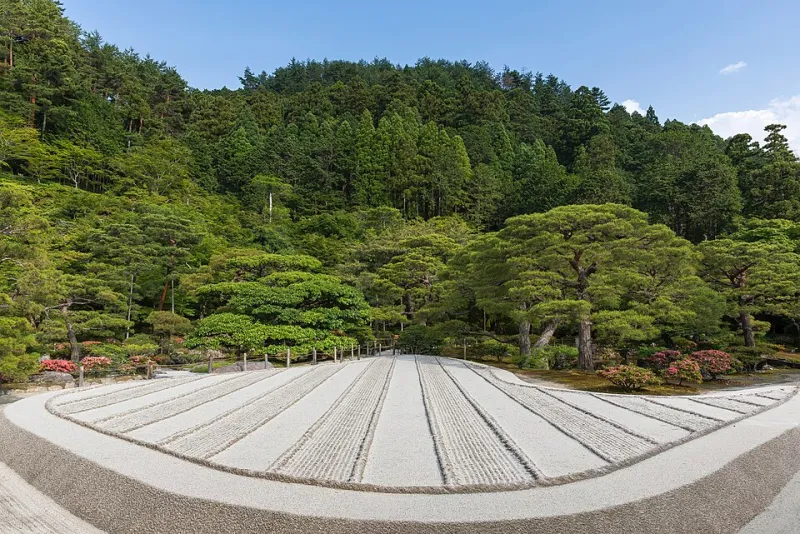
Photo: Basile Morin, CC BY-SA 4.0, via Wikimedia Commons
There's a particular kind of tired that comes from saying yes when every cell in your body is screaming no. You know the one — agreeing to cover a coworker's shift, taking on another committee role at your kid's school, smiling through a dinner you didn't want to attend. Americans have a complicated relationship with the word "no." We're raised to be team players, to show up, to hustle. But somewhere in all that showing up, a lot of us have quietly lost ourselves.
Here's the thing though: there's a whole cultural framework on the other side of the Pacific that has been navigating this exact tension for generations — and it doesn't look anything like the boundary-setting content flooding your TikTok For You page.
What 'Wa' Actually Means (And Why It's Not What You Think)
In Japanese culture, wa (和) translates loosely to "harmony" — but that translation barely scratches the surface. Wa isn't passive. It's not about keeping your head down or going along to get along. It's an active, ongoing commitment to the health of a group dynamic. Think of it less like a yoga pose and more like a garden that requires constant, mindful tending.
The Western misread of wa is assuming it means self-erasure. But in practice, wa actually demands that individuals understand their own needs clearly — because you can't contribute meaningfully to a group's harmony if you're running on empty. Overcommitting, burning out, and then quietly resenting everyone around you? That's actually a disruption to wa, not a contribution to it.
So the next time you're tempted to say yes just to keep the peace, consider this: you might actually be introducing chaos into the very harmony you're trying to protect.
Haragei: The Power of the Unspoken
Another concept worth sitting with is haragei (腹芸) — often translated as "belly art" or "reading the room." It refers to a form of nonverbal, intuitive communication where meaning is conveyed through atmosphere, tone, and what's deliberately not said. In Japanese professional and social settings, a well-timed silence or a subtle shift in expression can communicate more than a paragraph of words.
For Americans who've been trained to over-explain every boundary — to justify, defend, and almost apologize for having needs — haragei offers a genuinely radical alternative. You don't always have to make a whole speech. A measured pause, a gentle redirect, a calm and unelaborated "that doesn't work for me" can carry enormous weight when delivered with quiet confidence.
This isn't manipulation or passive aggression. It's a kind of emotional intelligence that respects both parties enough to trust that not everything needs to be spelled out. The person asking you to take on more work doesn't always need a five-bullet-point explanation — and honestly, over-explaining often signals anxiety more than clarity.
The Guilt Loop and How Wa Disrupts It
Here's where things get interesting for the people-pleasers in the room. A lot of boundary-setting advice in American wellness culture leans heavily on assertiveness — speak your truth, use "I" statements, own your no. And that's genuinely useful. But it doesn't always address the guilt spiral that kicks in after you've said no.
Wa reframes the whole equation. Instead of asking "will this person be upset with me?" the wa-informed question becomes "is this arrangement actually sustainable for everyone involved?" That shift is subtle but powerful. It moves the conversation from personal guilt to collective health.
When you say no to taking on a project you're not resourced for, you're not abandoning your team — you're preventing a half-done job that would have let everyone down anyway. When you decline a social obligation you genuinely can't handle, you're not being selfish — you're keeping yourself whole enough to show up meaningfully when it actually counts.
Practical Translations for American Life
So how does this actually play out in a country where directness is often mistaken for confidence and saying no can feel professionally risky?
At work: Try replacing the reflexive "sure, I can do that" with a brief pause and a practical question — "Let me check what I have on my plate and get back to you by end of day." That's not avoidance. That's wa in action: ensuring your yes actually means something.
In relationships: You don't have to have a boundary conversation every single time. Sometimes, quietly choosing not to engage with a drama-heavy text thread, or simply being less available, communicates what you need without requiring a formal declaration. Haragei works in personal life too.
For your own wellness: The Japanese concept of ma (間) — negative space, the pause between things — is worth borrowing here. Build deliberate emptiness into your schedule. An unscheduled Saturday afternoon isn't wasted time; it's the breath between notes that makes the music make sense.
You Don't Have to Be Loud to Have Limits
American wellness culture has done a lot of good work normalizing boundaries. But the conversation can sometimes feel like it requires a certain performance of assertiveness that not everyone is wired for — or comfortable with. Japanese cultural philosophy offers a quieter, more interior path to the same destination.
You can protect your energy without a manifesto. You can hold your ground without raising your voice. You can say no — or even just not yes — and let the silence carry it.
Harmony, real harmony, has never required you to disappear into it. It's always needed you whole.