Your Reason to Get Out of Bed: How Ikigai Can Quietly Transform the Way You Live
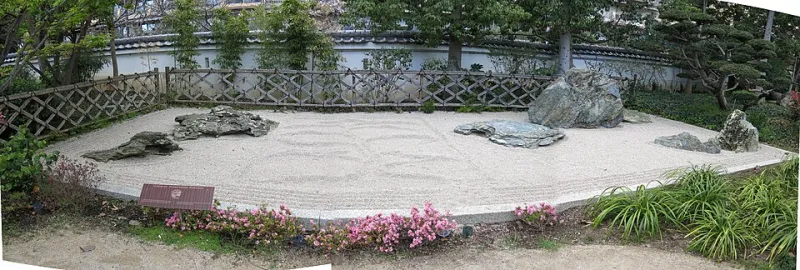
Photo: Tangopaso, Public domain, via Wikimedia Commons
Somewhere between the third cup of coffee and the fourteenth Slack notification of the morning, a lot of us have quietly asked ourselves: Is this it? Not in a dramatic, crisis-level way — just a low hum of dissatisfaction that never quite goes away. If that sounds familiar, you might want to borrow a page from Japan.
The word is ikigai (生き甲斐), and it translates roughly to "reason for being" or "that which makes life worth living." It's a concept rooted in Okinawan culture — a region famous, by the way, for having one of the highest concentrations of centenarians on the planet. Coincidence? The researchers who've studied this don't think so.
But here's the thing: ikigai isn't a self-help hack or a productivity framework. It doesn't come with a 30-day challenge or a color-coded planner. It's quieter than that, and honestly, more personal.
So What Actually Is Ikigai?
You've probably seen the Venn diagram floating around Pinterest or LinkedIn — four overlapping circles labeled What You Love, What You're Good At, What the World Needs, and What You Can Be Paid For. The sweet spot in the middle? That's where ikigai supposedly lives.
Fair enough as a starting point, but Japanese scholars like Ken Mogi (author of The Little Book of Ikigai) argue that the Western version oversimplifies it. In Japan, ikigai doesn't have to be your job or your grand life mission. It can be as small as the morning ritual of making a perfect cup of matcha, tending a garden, or teaching your kid how to fold origami cranes. The point is that it brings you a feeling of worth — a sense that today mattered.
That distinction is kind of huge, especially in a country where we've been conditioned to believe our purpose has to be monetized or résumé-worthy.
Where Americans Often Get Stuck
A lot of folks in the US approach purpose-hunting like a job search. They want the answer to arrive fully formed, ideally with a salary attached. But ikigai doesn't work that way. It's discovered gradually, through small experiments and honest reflection — not through a personality quiz at 2 a.m.
Take Marcus, a 34-year-old graphic designer from Austin who spent years grinding at a corporate agency feeling creatively hollow. He stumbled onto ikigai through an anime podcast (relatable, honestly) and started mapping out his four circles. What he found surprised him: he didn't hate design. He hated designing things he didn't believe in. His ikigai wasn't a career change — it was a client change. He now freelances almost exclusively for independent musicians and small nonprofits. The pay is leaner, but the Monday mornings are different.
Or consider Priya, a nurse in Chicago who felt like her work was meaningful but personally draining. When she explored her ikigai, she realized she'd abandoned painting — something she'd loved since childhood — because it felt "unproductive." Reintroducing it as a non-negotiable part of her week didn't change her career, but it changed how she showed up to it.
Neither story is a Hollywood transformation. That's kind of the point.
Practical Ways to Start Finding Yours
If you want to actually engage with ikigai rather than just pin the diagram and move on, here are a few approaches worth trying:
Start with small joys, not big dreams. Grab a notebook and spend a week jotting down moments — however tiny — when you felt genuinely absorbed or alive. Not happy necessarily, just present. Patterns will emerge.
Ask the four questions, but slowly. Don't try to answer all four circles in one sitting. Spend a week with each one. "What am I good at?" sounds easy until you actually sit with it without defaulting to your job title.
Look for the friction. Ikigai often hides in the things you keep almost doing but talk yourself out of. That online ceramics class. That community garden plot. That YouTube channel about vintage Japanese woodblock prints you've been "thinking about" for two years.
Talk to people who seem alive. Not successful — alive. There's a difference. Ask them what gets them going. You'll learn more from that conversation than from most books on the subject.
Give it time to be small. Your ikigai right now might be Saturday morning farmers market trips with your partner. That's not a consolation prize. That's a real answer.
The Bigger Picture
What makes ikigai feel so relevant in 2025 America is exactly what makes it feel foreign: it's not optimized. It doesn't scale. It can't be turned into a side hustle without losing something essential about it.
In a culture obsessed with output and hustle, the idea that your reason for being might just be this morning, this coffee, this conversation is almost radical. Japanese culture has long understood that meaning doesn't have to be grand to be real. The beauty of a single cherry blossom isn't diminished by the fact that it falls.
And maybe that's the most useful reframe of all. You don't have to find your one true purpose. You just have to find what makes today feel worth it. Start there, and see where it leads.
Because honestly? That's a much better use of your Sunday afternoon than refreshing LinkedIn.