Stop Saying Yes to Everything: How Shibui Thinking Cures Your Decision Hangover
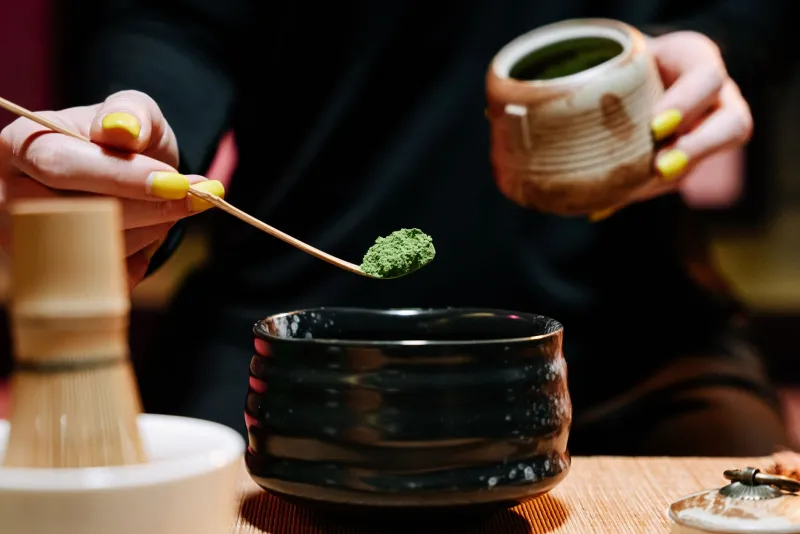
Somewhere between the third Slack notification and the fourth "you should really look into this opportunity" text, your brain quietly gave up. Not dramatically — no white flag, no meltdown. Just a slow, creeping numbness where your judgment used to live. That's decision fatigue, and in the US right now, it's basically a national pastime.
We celebrate the yes culture hard. Say yes to the networking event. Say yes to the freelance gig. Say yes to the new platform, the new diet trend, the new everything. The hustle mythology practically demands it. But here's the thing — all that enthusiastic yes-ing has a cost, and most of us are paying it in the currency of exhaustion, half-finished projects, and a vague sense that we're somehow busier than ever while accomplishing less than we'd like.
Japanese aesthetics and cultural philosophy have been quietly solving this problem for centuries. Specifically, through a concept called shibui.
What Even Is Shibui?
Shibui (渋い) doesn't translate neatly into English, which is honestly part of its power. It describes a quality of restrained, understated beauty — something that reveals its worth slowly, over time, rather than screaming for your attention upfront. Think of a well-worn ceramic tea bowl, a piece of indigo-dyed fabric that deepens with age, or a jazz melody that gets richer the tenth time you hear it versus the first.
In Japanese aesthetics, shibui is considered one of the highest compliments. It's the opposite of flashy, trendy, or immediately gratifying. And crucially, recognizing something as shibui requires you to slow down and actually look — which is exactly the move that decision fatigue steals from you.
Applied to your actual life choices? Shibui thinking becomes a filter. Before committing to something — a job offer, a relationship, a creative project, a new habit — you ask: does this have the kind of value that deepens over time, or is this just bright and loud right now?
It sounds simple. It is genuinely hard.
Why Your Brain Hates Choosing (And How That's Not Entirely Your Fault)
Decision fatigue is well-documented. The more choices you make throughout the day, the worse your judgment gets — your brain burns through glucose, your prefrontal cortex gets sluggish, and you start defaulting to either impulsive picks or complete avoidance. Barry Schwartz famously called it the paradox of choice: more options don't make us freer, they make us more anxious and less satisfied.
American consumer culture is practically engineered to exploit this. Infinite scroll, endless streaming libraries, career coaches telling you to "keep your options open" — it all adds up to a decision environment that's working against your ability to commit to anything meaningful.
Japanese culture historically took a different architectural approach to choice. Constraints were features, not bugs. The tea ceremony isn't just about tea — it's about creating a contained, deliberate space where every element has been curated to eliminate distraction. The kaiseki meal isn't a buffet. The ikebana arrangement uses three stems, not thirty. Limitation is the design.
Shibui extends that logic into evaluation. If something doesn't earn sustained attention, it doesn't earn a yes.
The Shibui Framework: Four Questions Before You Commit
Here's a practical way to run opportunities through a shibui lens before your next big decision. These aren't meant to be quick gut-check questions — sit with each one.
1. Does it get better with time, or just louder? Flashy opportunities front-load their appeal. They sound incredible in the pitch but tend to flatten out once the novelty fades. Shibui choices tend to reveal new layers the longer you're in them. A career path that feels slow but builds genuine expertise. A friendship that gets more interesting as you both grow. Ask yourself: will I find more here in two years, or less?
2. Does it require me to become someone I don't recognize? Shibui aesthetics value authenticity and coherence — the object (or choice) should feel true to its own nature. If saying yes means performing a version of yourself that feels like a costume, that's a signal worth heeding. Sustainable choices tend to align with who you actually are, not who you think you should be performing.
3. Would I still want this if nobody else could see it? A lot of American yes-culture is social. We say yes to things for the story, the Instagram moment, the LinkedIn update. Shibui is inherently private in its appeal — it doesn't depend on an audience. Strip away the external validation and check whether the thing still holds value for you alone.
4. Am I choosing this, or am I just avoiding the discomfort of saying no? This one stings a little. A lot of yeses aren't really yeses — they're conflict-avoidant maybes dressed up in enthusiastic language. Shibui thinking requires honesty about your actual motivations. The no that preserves your energy and focus for something that genuinely matters is more valuable than the yes that keeps the peace but costs you six months.
The Practical Part: Building a Shibui Shortlist
One tool that pairs well with this framework is what you might call a Shibui Shortlist — a small, curated set of commitments that you've deliberately chosen to protect.
Take a piece of paper (yes, actual paper — the analog constraint is intentional) and write down the three to five things in your life right now that you'd describe as shibui by that framework. Things that are getting richer, that feel authentically yours, that don't require an audience to justify. These are your anchors.
Now look at your current yes pile — the projects, obligations, and opportunities you've committed to. How many of them are on the shortlist? How many are just noise that got in the door because you were too tired or too polite to redirect?
The goal isn't to slash everything down to some minimalist fantasy. It's to get clear on what actually deserves your full presence, so that when you do say yes, it means something.
Saying Less, Getting More
There's a reason so many people who discover Japanese cultural philosophy describe it as a kind of relief. Not because it's escapist — it isn't — but because it offers a coherent alternative to the exhausting maximalism that dominates so much of American life.
Shibui won't solve your inbox. It won't make your boss less demanding or your social calendar less chaotic. But it gives you a lens that cuts through the noise — a way of asking does this last? before you hand over your time, your energy, and your attention.
And in a world where everyone is competing for all three, knowing what actually earns a yes might be the most useful skill you develop this year.