Wait Before You Leap: What Japanese Patience Culture Knows About Big Life Decisions

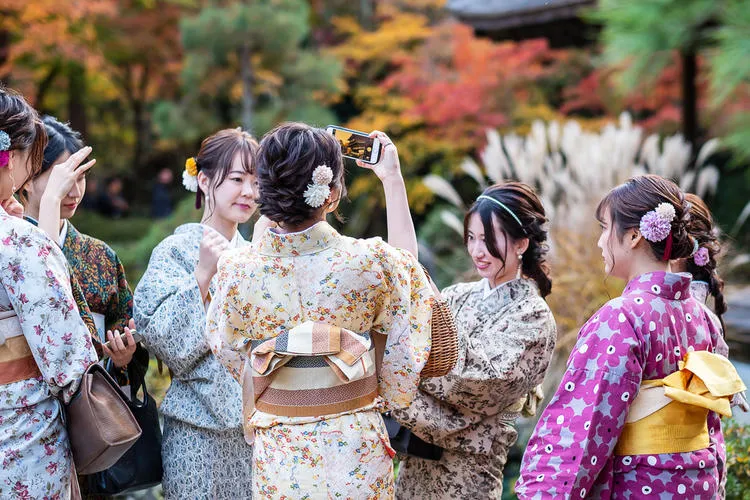
Photo: 阿橋 HQ, CC BY-SA 2.0, via Wikimedia Commons
There's a particular kind of anxiety that kicks in the moment you're staring down a big decision. Quit the job or ride it out? Say yes to the relationship or pump the brakes? Buy the apartment, take the trip, send the text? American culture has a pretty consistent answer to all of the above: figure it out fast and move. Urgency is practically a personality trait here.
Japan, on the other hand, has spent centuries developing a different relationship with time — one where waiting isn't weakness, it's wisdom. The word matte (待って) literally means "wait," but it carries a cultural weight that goes way beyond just holding on a second. In Japan, deliberate pausing before a major decision is a sign of respect — for the situation, for the people involved, and for yourself.
So what does that actually look like in practice? And how do you use it without slipping into the very American trap of calling avoidance "patience"?
The Urgency Trap Nobody Talks About
We're surrounded by systems designed to make us decide right now. Flash sales. Lease-signing deadlines. Job offers with 48-hour windows. Dating apps that reward fast swipes. Even the way we talk about opportunity — "strike while the iron's hot," "you snooze, you lose" — frames slowness as a character flaw.
The result? A lot of decisions that feel decisive in the moment but fall apart in hindsight. That impulsive job switch that seemed like a power move until the new company turned out to be worse. The relationship you rushed into because you were scared of being alone. The apartment you signed on because you didn't want someone else to take it.
Research in behavioral psychology backs this up — decisions made under artificial time pressure tend to rely more heavily on emotion and less on actual reasoning. We're not bad at deciding; we're bad at deciding fast.
What Matte Actually Means
In Japanese daily life, matte shows up everywhere — in negotiations, in conversations, in the way major purchases get considered over weeks rather than weekends. It's not passivity. It's not fear. It's a culturally embedded understanding that some things need to breathe before they become clear.
There's a concept adjacent to this called jikkan (実感) — the sense of truly feeling or experiencing something before accepting it as real. Japanese decision-making often waits for jikkan to arrive. You sit with the possibility of something long enough that your gut, your logic, and your circumstances all get a chance to weigh in.
That's very different from how most Americans approach choices, where the goal is to minimize the discomfort of uncertainty by resolving it as quickly as possible. Japan's approach says: the discomfort is part of the process. Let it do its job.
Patience vs. Procrastination: Drawing the Line
Here's the part where we have to be honest with ourselves, because "I'm being intentionally patient" can become a very comfortable excuse for not doing the scary thing.
The difference comes down to engagement. Procrastination is avoidance — you're not thinking about the decision, you're hiding from it. Strategic waiting is active — you're gathering information, observing how you feel over time, noticing what changes and what doesn't.
A few questions that help clarify which one you're actually doing:
-
Am I learning anything new in this waiting period, or just delaying? If you're researching, talking to people, sitting with your feelings honestly — that's patience. If you're just refreshing Instagram and hoping the decision makes itself — that's avoidance.
-
Does more time actually give me more useful information? Some decisions genuinely benefit from a longer runway. Others have all the information available on day one. Know which kind you're dealing with.
-
What's the actual cost of waiting two more weeks? Sometimes urgency is real. More often, it's manufactured. Asking this question honestly cuts through a lot of noise.
How to Build a Waiting Practice
You don't need to move to Kyoto to apply this. Here are a few frameworks that translate surprisingly well to American life:
The 72-Hour Rule for Non-Emergency Decisions For anything that feels urgent but probably isn't — a career move, a big purchase, a confrontation you're tempted to have via text at 11pm — give it 72 hours before acting. Not to delay indefinitely, but to let the initial emotional charge settle. What still feels true after 72 hours is usually closer to what's actually true.
Write the Decision Down and Walk Away In Japan, important communications are often drafted carefully, set aside, and revisited. Try it. Write out your decision, your reasoning, your gut feeling. Close the notebook. Come back to it two days later and read it like it was written by someone else. What do you notice?
Watch for the Season to Change Japanese culture is deeply attuned to seasonal shifts — there's a reason kisetsukan (seasonal awareness) influences everything from food to fashion to emotional rhythms. Big decisions made in moments of stress, grief, or burnout often look different once the season changes — literally or figuratively. If you're considering a major move in the middle of a rough patch, ask yourself whether you'd make the same call on a regular Tuesday.
Name What You're Waiting For Strategic patience isn't open-ended. Set a clear internal marker: "I'll decide after I've had three honest conversations about this," or "I'll revisit this once the current project is finished." Waiting with a defined endpoint is a practice. Waiting indefinitely is just drift.
The Decisions That Deserve More Time
Not every choice needs this treatment — what to order for lunch doesn't require a 72-hour incubation period. But a handful of life categories really do benefit from the matte approach:
Career moves — especially those driven by frustration. Leaving a bad situation is valid, but the next move is worth taking time on.
Relationships — both entering and exiting them. Urgency in romance is often anxiety in disguise.
Major purchases — particularly ones tied to identity (a car, a home, a wardrobe overhaul). The aspiration is real; the specific object might be replaceable.
Confrontations and hard conversations — a little waiting transforms reactive venting into something that actually gets heard.
Slowness as a Skill
Here's the reframe that makes this whole thing click: patience isn't something you either have or you don't. It's a muscle. And like most muscles, it gets stronger when you use it deliberately and weaker when urgency culture convinces you it's not worth the effort.
Japan's relationship with time isn't about being slow for slow's sake. It's about trusting that the right action, taken at the right moment, is worth more than a fast action taken under pressure. Matte isn't hesitation — it's respect for the weight of what you're deciding.
In a culture that glorifies the fast pivot and the bold move, choosing to wait — really wait, with intention and attention — might be the most countercultural thing you can do. And quite possibly the smartest.