Disappear on Purpose: What Japanese Withdrawal Culture Can Teach You About Logging Off for Good
There's a moment most of us recognize — usually around 11 p.m. on a Tuesday — when the phone feels less like a tool and more like a leash. You've scrolled past the same three arguments, two product drops, and one celebrity implosion you don't actually care about. And yet you keep going. Not because it's interesting. Because stopping feels like falling.
Japanese culture has a complicated, nuanced relationship with withdrawal that Americans rarely get the full picture of. When the word hikikomori surfaces in Western media, it's almost always framed as pathology — the image of a young person sealed inside their room, curtains drawn, completely cut off. That framing isn't wrong, exactly. But it's incomplete. And in its incompleteness, it misses something genuinely useful.
Because underneath that clinical label is a much older, much richer cultural thread: the idea that stepping away from the world — deliberately, temporarily, intentionally — is not weakness. It's strategy.
The Long History of Japanese Retreat
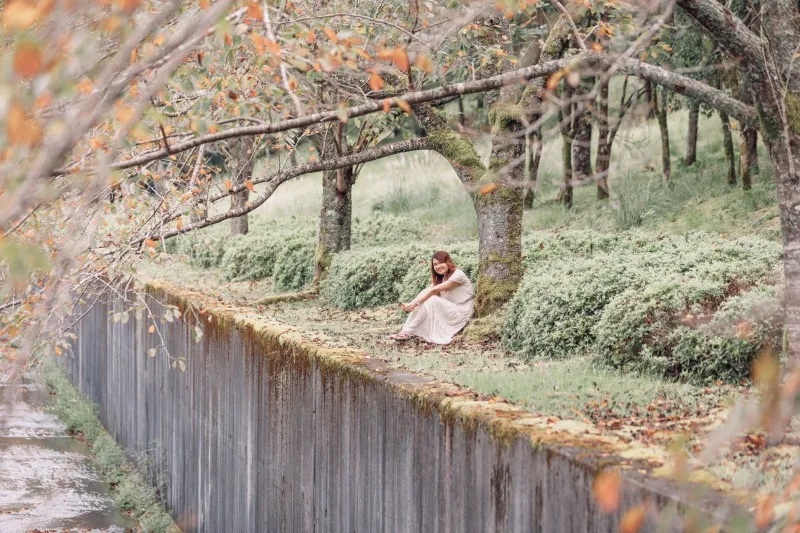
Long before social media made overstimulation a public health issue, Japanese culture was building architecture around the need for intentional withdrawal. The practice of komorebi — that particular quality of light filtering through forest leaves — wasn't just aesthetic appreciation. It was an invitation to slow down and receive. Zen Buddhist monks scheduled periods of sesshin, intensive silent retreats that stripped away the noise of daily life to get at something quieter underneath.
Even in everyday residential design, the traditional Japanese home included spaces specifically engineered for stillness. The tokonoma, a recessed alcove holding a single scroll or flower arrangement, wasn't decorative clutter. It was a visual full stop. A place for the eye — and the mind — to rest.
Withdrawal, in this context, was never about permanent disappearance. It was about the rhythm of engagement and disengagement. The idea that you cannot stay fully present in the world if you never leave it for a while.
Reframing the Retreat Impulse
Here's what's worth borrowing from this tradition: the distinction between reactive withdrawal and intentional withdrawal.
Reactive withdrawal is what most of us do. We get overwhelmed, we ghost our group chats, we cancel plans at the last minute and feel vaguely guilty about it for days. It's messy. It's unplanned. And because it happens in response to crisis rather than as deliberate self-care, it rarely delivers the reset we actually need.
Intentional withdrawal is something else entirely. It's scheduled. It has a shape and a duration. It ends with a return — not an escape.
Japanese wellness culture, particularly as expressed through practices like forest bathing (shinrin-yoku) and solo temple stays (shukubo), treats this kind of deliberate stepping-back as maintenance, not emergency response. You don't wait until you're running on fumes. You build the retreat into the calendar the same way you build in the dentist appointment — not because you're already in pain, but because prevention is smarter than repair.
What an Intentional Offline Season Actually Looks Like
Let's get practical, because this is where most American readers hit a wall. The idea sounds beautiful. The execution feels impossible.
Start smaller than you think you need to. A full week offline sounds transformative in theory, but if you've never done it, you're more likely to white-knuckle through it and end the week more anxious than when you started. Instead, think in layers.
The micro-retreat (daily). Borrow from the ma concept — the Japanese appreciation for meaningful pause and empty space. Designate one 30-minute window each day as a no-screen zone. Not a productivity window. Not a meditation session if that's not your thing. Just unstructured, offline time. You can stare out the window. You can make tea slowly. The point is the absence of input, not the presence of a specific activity.
The mid-range reset (weekly). Pick one full day per week — or even half a day to start — where you don't check social media. Not a digital detox in the performative sense where you post about it before you go. Just quietly, privately, step away. Notice what fills the space. Notice what you miss and what you don't.
The seasonal withdrawal (quarterly). This is where it gets genuinely Japanese in spirit. Four times a year, aligned loosely with seasonal shifts, schedule a longer offline period. A weekend. Three days. Maybe, eventually, a full week. The Japanese concept of kisetsukan — deep attunement to seasonal change — frames each season as a natural transition point, a moment when the world itself is shifting registers. Use those transitions as permission to shift yours.
Handling the FOMO Problem
The fear of missing out is real, and it's worth addressing directly rather than cheerfully pretending it isn't an obstacle.
Here's something interesting: FOMO tends to spike hardest in the first 24 hours of any offline period and then drops sharply. The anxiety is mostly anticipatory. Once you're actually away from the feed, the feed stops feeling urgent. This is documented in behavioral research, and it's also something you'll verify the first time you try it.
Japanese culture handles this through a concept sometimes described as mono no aware — the gentle acceptance that things pass, that moments are transient, and that this impermanence is not something to fight but something to feel. The posts you miss while you're offline? They'll still exist when you return, or they won't, and either way, your life will be unchanged by their presence or absence.
The world did not stop while you were in the forest.
Coming Back Without Crashing
The return matters as much as the retreat. One of the underrated failures of most digital detox attempts is that people come back without a plan, immediately flood back into full consumption mode, and undo most of the benefit within 48 hours.
Think about the return the way a sesshin retreat structures its ending — gradually, with intention. Come back to one platform at a time. Set a timer for your first session back. Notice how the content feels after the gap. Does it still feel necessary? Does some of it feel like noise you'd been mistaking for signal?
Use that window of fresh perception before the numbness returns. It's brief, but it's useful.
The Radical Case for Disappearing Regularly
There's something almost countercultural about building regular disappearances into your life in 2025. The entire architecture of the attention economy is designed to make your absence feel costly — to you and to the people watching. Notifications are engineered to feel urgent. Streaks are designed to make gaps feel like failure.
Japanese withdrawal traditions push back against that framing quietly but firmly. Presence is not the same as constant visibility. Engagement is not the same as perpetual availability. And the self you bring back from a deliberate retreat — rested, recalibrated, actually curious about the world again — is a more interesting, more generous, more creative version of you than the one who never logged off.
Disappear on purpose. Come back better. Repeat.
That's not pathology. That's a practice.