Do Nothing on Purpose: The Japanese Secret to Finally Finishing Your Creative Work
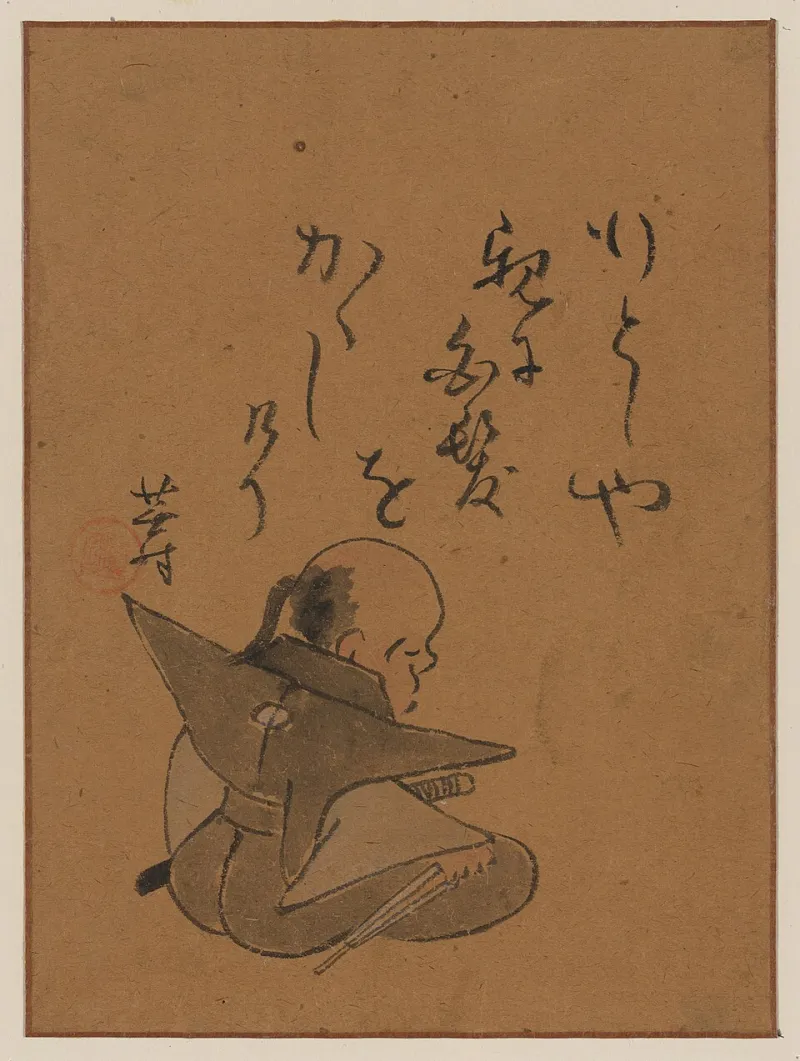
Photo: Japanese fine prints, pre-1915, Public domain, via Wikimedia Commons
You've got a half-finished painting sitting on your desk. A Google Doc with a chapter outline that hasn't been touched in three weeks. A sketchbook that makes you feel guilty every time you walk past it. Sound familiar?
Here in the US, we tend to diagnose that feeling as a personal failure — a discipline problem, a motivation problem, maybe even a character problem. Hustle culture has done a number on us. We've been told that output equals worth, that rest is just laziness wearing a cozy sweater, and that if you're not actively making something, you're falling behind.
But Japanese creative tradition has a very different read on that quiet, seemingly unproductive stretch between bursts of work. And honestly? It might be exactly what your stalled project needs.
The Space That Isn't Empty
In Japanese aesthetics, there's a concept called ma (間) — often translated as "negative space" or "pause" — and it shows up everywhere. In the deliberate silence between notes in a shamisen performance. In the open air surrounding a single branch in an ikebana arrangement. In the unhurried gap between a question and its answer in traditional theater.
Western audiences sometimes look at ma and think: something's missing. Japanese artists look at the exact same space and think: that's where the meaning lives.
The idea isn't that emptiness is the absence of something important. It's that emptiness is something important. The pause holds tension. It creates anticipation. It lets the thing that came before breathe and land properly before the next thing arrives.
Now apply that to your creative process. What if the three weeks you spent not touching your manuscript weren't wasted time — but ma time? What if your brain was doing the real work underground, and you just didn't have a framework for understanding that?
Deliberate Delay Has a Long Résumé in Japan
This isn't just abstract philosophy. Japanese creative history is full of practitioners who built intentional waiting directly into their process.
The haiku master Matsuo Bashō was famous for sitting with a poem for months — sometimes years — before declaring it finished. He wasn't stuck. He was listening. He believed that a poem needed time to settle into its truest form, and that rushing it to completion was a kind of violence against the work itself.
Lacquerware artisans in Wajima, a craft tradition that goes back centuries, apply dozens of layers of urushi lacquer over months, allowing each coat to cure completely before the next is added. You literally cannot rush the process — the material won't allow it. The waiting is the technique.
Even in manga culture, some of the most celebrated artists have spoken openly about the role of incubation. Naoki Urasawa, the creator of Monster and 20th Century Boys, has described how he lets story problems sit in the back of his mind during mundane daily activities — walking, eating, doing nothing in particular — trusting that his subconscious will work out what his conscious mind can't force.
The pattern across all of these examples is the same: delay is not the enemy of completion. Premature forcing is.
Why Your Brain Actually Needs This
There's real neuroscience backing this up, which is satisfying for anyone who needs a little Western validation before they feel okay sitting on the couch guilt-free.
Researchers studying the brain's default mode network — the system that activates when you're not focused on a task — have found that this is when the brain makes unexpected connections, synthesizes information from different domains, and generates novel ideas. In other words, daydreaming isn't a bug. It's a feature. It's your creative brain running its background updates.
The problem is that most of us in the US have trained ourselves to interrupt that process constantly. Phone check. Productivity app. Another podcast. We've essentially disabled the very system that would help us break through creative blocks, and then we wonder why we feel creatively dried out.
Ma as a practice is, in part, a permission structure for letting that default mode network do its thing.
How to Actually Practice This (Without Turning It Into an Excuse)
Okay, real talk: there's a difference between intentional creative pause and just... avoiding your work indefinitely. The Japanese masters weren't ignoring their projects. They were present with the waiting. That distinction matters.
Here's how to bring some of this into your actual creative life without it becoming a sophisticated new form of procrastination:
Set a return date. Bashō didn't just abandon poems forever. He stepped back with intention and came back with intention. Before you give yourself space from a project, name the day you'll re-engage. Even if it shifts, having that anchor keeps the pause purposeful rather than permanent.
Stay in sensory contact with the work. You don't have to be actively producing to stay connected to a project. Leave your sketchbook open on the coffee table. Reread one paragraph of your draft while you're drinking your morning coffee. Keep the thing in your peripheral vision so your subconscious knows it's still live.
Do genuinely idle things. Take a walk without your AirPods. Wash dishes without a podcast. Sit outside and watch something boring happen slowly. These aren't wasted minutes — they're the conditions under which your default mode network does its best work. Think of it as sending your creative brain to the gym while your conscious mind takes a nap.
Notice what surfaces. Keep a small notebook or use your phone's voice memo app to catch whatever bubbles up during these quiet periods. Often the most useful creative insights arrive sideways — while you're in the shower, or stuck in traffic, or staring out a window. The ideas from ma time tend to feel less forced and more true than what you squeeze out during a grinding "productive" session.
Resist the urge to explain yourself. American productivity culture is going to make you feel like you need to justify any period that doesn't produce visible output. You don't. The urushi lacquer doesn't apologize for taking months to cure. Your creative work doesn't owe anyone a faster timeline either.
The Real Productivity Hack Nobody's Selling
We're pretty obsessed, culturally, with hacks and systems and frameworks for doing more faster. There's a whole industry built on that obsession. But sometimes the most radical thing you can do for your creative work is to stop treating every quiet moment as a failure to optimize.
Japanese creative tradition — in its art, its craft, its performance, its philosophy — keeps returning to the same counterintuitive truth: the pause is part of the work. The empty space is load-bearing. The delay, done right, is what makes the eventual thing worth making.
Your passion project isn't behind. It might just be curing.